
Best Places to Dive in Fuerteventura: A Guide by Area
October 7, 2026
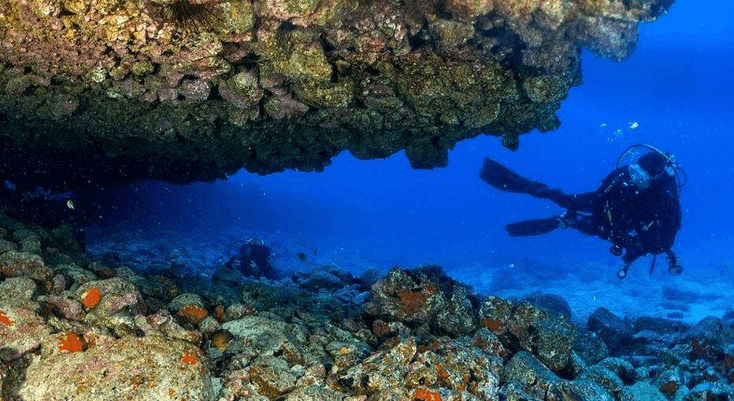
If you are looking for the best places to dive in Fuerteventura, you have plenty to choose from. The volcanic seabeds, underwater walls, sandy areas and variety of marine life make it possible to find dives both for those who are just starting out and for more experienced divers.
The key is to understand that the dive sites are spread across different parts of the island. Some of the best known are concentrated around Corralejo and Isla de Lobos, others are near Caleta de Fuste and Las Salinas, while in the south the dives at Morro Jable and Jandía stand out.
That is why, if diving is going to be an important part of your holiday, I would organise the trip by area. Having a car helps a lot when moving between your accommodation, the dive centres and other places in Fuerteventura without depending on a single point on the island.
1. Bajón del Río: una de las inmersiones más famosas
Between Fuerteventura and Isla de Lobos lies Bajón del Río, also known for its distinctive mushroom-shaped volcanic formations. It is one of the most recognisable underwater landscapes in the Corralejo area. Around the rock structures you can find shoals of fish, groupers, jacks, rays and, occasionally, angel sharks.
Currents are the element that requires special attention. Although it can be accessible to different levels in good conditions, this is not a dive to be approached without taking tides and currents into account. The right way to do it is with a centre that knows the area well and decides when it is safe to enter.
2. El Puente: Perfect for Enjoying the Volcanic Landscape
Also in the area around Isla de Lobos we find El Puente, a particularly interesting option if you are looking for a shallow dive.
The route runs at roughly 7 to 10 metres and passes through lava formations, small caves, chimneys, ledges and rocky passages. The marine life that may appear includes groupers, jacks, stingrays, parrotfish, red mullet and barracudas.
Thanks to its shallow depth and low difficulty, it is one of the sites best suited to divers with little experience, always following the instructions of the dive centre.
3. La Carrera: White Sand, Lava and Angel Sharks
La Carrera, to the east of Isla de Lobos, combines a sandy platform with volcanic rocks at around 12-15 metres.
It is precisely this contrast between pale sand, dark rock and clear water that makes it an especially photogenic dive. On the seabed you may come across stingrays and angel sharks, while around the rocks various fish and shoals of barracudas are common.
Its difficulty is considered low, so it can be another good alternative to combine over several days of diving in the north of Fuerteventura.
4. El Jablito: One of the Best Places to Get Started
If you are looking for where to dive in Fuerteventura as a beginner, El Jablito should be among your options.
It is located on the northeast coast and has a maximum depth of approximately 15 metres. Unlike many other sites on this list, access is from the beach. The layout of the terrain also provides some protection from currents.
The seabed combines sand and rock and allows you to see white seabream, parrotfish, barracudas, Mediterranean rainbow wrasse, crabs and possible angel sharks. It is also a
5. La Caleta: Diving Next to Caleta de Fuste
In the centre of the island we find several interesting dives around Caleta de Fuste and Las Salinas. One of them is La Caleta, a short distance from the Caleta de Fuste pier. It is a boat dive with a depth of approximately 15 metres and a rocky-sandy seabed, relatively sheltered from the waves and with little current in suitable conditions.
Among the marine life you may find are angel sharks (especially mentioned in winter), juvenile barracudas, white seabream, bogues, octopuses and squid.
For Ecocar, this area is especially familiar because our office is right in Caleta de Fuste, and we also deliver vehicles directly at the airport.
6. Castillo Negro: An Option for More Experienced Divers
Also off Caleta de Fuste we find El Castillo Negro. This is a dive that reaches approximately 30 metres and is classified by the official guide as medium difficulty. The main attraction is the reef and its associated marine life, where large groupers, parrotfish, salema porgy or cuttlefish may appear. It is a good example of why you should not choose a dive simply because it is close to your accommodation: level, depth and conditions must match the diver's real experience.
7. Veril Grande: One of the Must-Dos in the South
In the far south, off Jandía, lies one of the most interesting seabeds in Fuerteventura: Veril Grande. The top of the wall is at around 20 metres and then drops to approximately 40. Depending on certification and experience, different routes can be dived, exploring the wall and some of its formations.
The marine life usually mentioned includes white seabream, moray eels, stingrays, garden eels and angel sharks. Official tourist information also records occasional sightings of large pelagic species, although these should obviously never be taken for granted.
If you are staying in Morro Jable or Jandía and want to dedicate several days to diving, this area is especially worth it.
8. El Cañón: An Easy Dive in Morro Jable
Another option in the south is El Cañón, with a maximum depth of approximately 14 metres.
Its seabed combines sand and small rock formations with numerous crevices where moray eels, stingrays and comber may hide. The area is also known for the chance of finding angel sharks resting on the bottom.
Because of its depth and difficulty, it is considered an easy dive, although, as always, it is the conditions on the day that rule.
Which Is the Best Area for Diving in Fuerteventura?
Which Is the Best Area for Diving in Fuerteventura?
It depends on your priorities.
Corralejo and Isla de Lobos probably offer the greatest variety and concentrate emblematic sites such as Bajón del Río, El Puente and La Carrera.
Caleta de Fuste and Las Salinas are very convenient if you are staying in the central area and want to combine diving with easy travel around the rest of the island. And Morro Jable and Jandía stand out especially for their drop-offs and underwater walls.
If you are going to dive for several days, I would avoid crossing Fuerteventura from north to south every morning. It is more practical to group your dives by area and use the car to change base or to dedicate other days to exploring the island.
How to Get Around Between Dive Sites in Fuerteventura
Many dive sites are ultimately reached by boat, but first you have to get to the dive centre, port or meeting point.
This is where having a vehicle can make the trip much simpler.
With car hire in Fuerteventura with Ecocar, you can pick up the vehicle directly at the Parking P1 of the airport, without having to use a shuttle. Ecocar also offers unlimited mileage, a fixed final price and, on most of its fleet, hire with no excess and no card hold.
If you are travelling with a lot of luggage, you can check Ecocar's car fleet beforehand. There are options ranging from compact cars to 7- and 9-seater vehicles with greater boot capacity.
This is useful when the trip does not revolve exclusively around diving and you want to combine Corralejo, Caleta de Fuste, Jandía and other destinations in Fuerteventura.
Tips Before Diving in Fuerteventura
Do not plan a dive solely by reading an online guide. Currents, swell and conditions can change, especially at certain sites in the north.
Always dive within the limits of your certification and follow the instructions of professionals who know the site. If you need to hire equipment, a boat trip or a guide, confirm beforehand what the centre includes.
And if you are going to use the car to transport your own gear, check the boot space before booking. For several people with bulky luggage, it may be worth choosing a larger vehicle instead of a compact.
Fuerteventura Underwater and on the Road
The best places to dive in Fuerteventura are spread across an island that changes quite a lot from north to south. Lobos offers some of its best-known seabeds; Caleta de Fuste lets you discover the centre; and Jandía completes the trip with impressive drop-offs. My recommendation is to first choose the dives that suit your level, group them geographically and then organise the rest of the trip around them. If you want to do it with freedom, you can book your hire car in Fuerteventura with Ecocar and pick it up directly when you land. That way you will have unlimited mileage to explore the island and a fixed price from the moment of booking.